
Blog & news

Blog — Data Recovery and Cybersecurity

Technical analyses, prevention tips and data recovery news from the experts at SOS Data Recovery, Swiss laboratory since 2006.

Cybersecurity & prevention
In-depth technical analyses
Expert practical advice
Free diagnosis Estimate your recovery
Free diagnosis Quote within 3 hours Your data stays in Switzerland

Why read our data recovery blog?

The SOS Data Recovery blog covers all topics related to data recovery, cybersecurity and the protection of digital storage media. Our experts share in-depth technical analyses, prevention tips and insights from over 20 years of laboratory experience.

Whether you are an individual looking to protect your photos and documents, or an IT professional managing RAID servers and NAS systems, you will find practical, verified information here. SOS Data Recovery is CyberSafe certified and CyberSafe partner and rated 4.8/5 on Avis Vérifiés (296 reviews).

Our articles : Support/Hard drive

Active filter : Support/Hard drive All articles
Flooded Hard Drive: Why You Must Not Let It Dry Out (and What to Do Instead)

Flooded Hard Drive: Why You Must Not Let It Dry Out (and What to Do Instead)

A hard drive that has been in water is not doomed, provided you do not let it dry out as is. It is not the water that kills a drive, it is the corrosion that follows: when the water evaporates, the conductive salts and residues remain on the circuit board and keep eating away at the metal. This guide explains, with the chemistry behind it, the three destructive mechanisms (short circuit, oxidation, electrolytic corrosion) and details the right first-aid steps: never plug it back in, remove the circuit board, rinse it with clean water, dry it fast, never open the casing, and hand the drive over to a lab as fast as possible. You will also find the aggravated cases (mud, extinguishing powder, chemicals), the time factor and an insurance trap well worth knowing: do not let the cleanup company sort through or throw away your storage media.

April 03, 2026 Author Stéphane Chapuis Read More
Clicking Hard Drive: What the Noise Means and Why You Must Switch It Off

Clicking Hard Drive: What the Noise Means and Why You Must Switch It Off

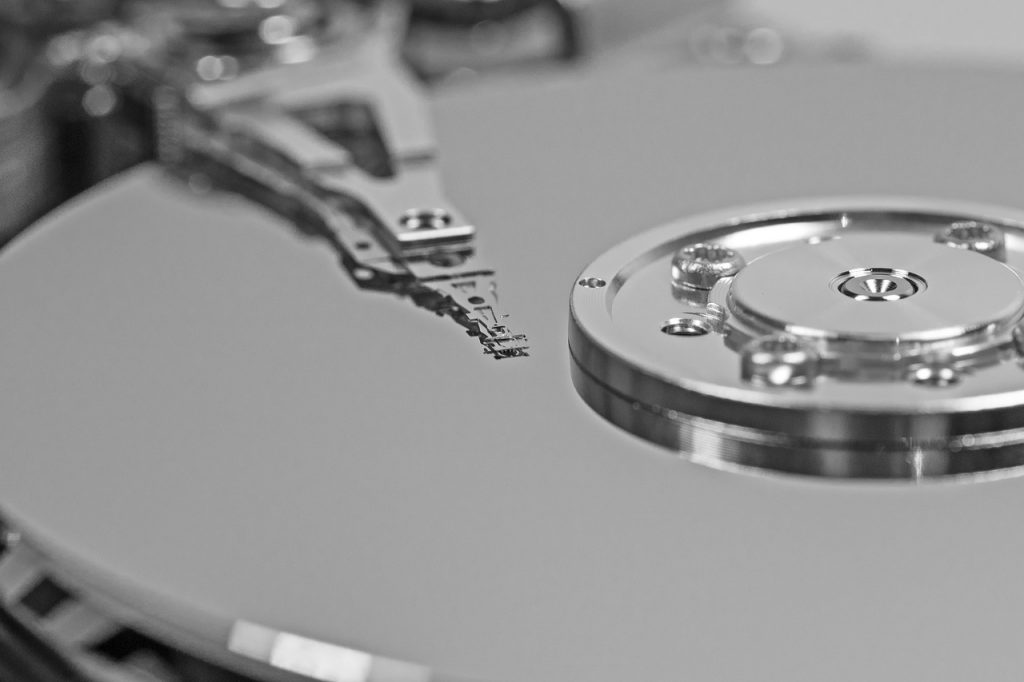
Is your hard drive going click click? This noise is not harmless, but it is not an immediate death sentence either. This guide explains what really happens inside: the read/write heads can no longer read the firmware stored on the platters, the circuit board keeps returning them to the stop of the parking zone, and this back-and-forth produces the clicking. Behind one and the same noise lie four possible causes, from a simple head replacement repairable in a cleanroom to permanent loss when a broken head grinds away the surface. You will understand why every restart to see if it works makes the failure worse, why the freezer, opening the drive or swapping the board must be avoided, and what the only reasonable action is before entrusting the device to a laboratory.

March 25, 2026 Author Stéphane Chapuis Read More
Hard disk operation

Hard disk operation

The precision of a read head is comparable to that of a Boeing 747 flying at 272 km per second, less than a centimeter above the ground, while being able to count every single blade of grass.

June 27, 2017 Author Nicole Ritler Read More
5mm High Hard Drives for 2015

5mm High Hard Drives for 2015

Microprocessor and motherboard manufacturer Intel is working with hard drive manufacturers to standardize a new 2.5" disk format for Ultrabooks. The idea is to reduce the size of hard drives by 28%.

January 18, 2014 Author Stéphane Chapuis Read More
PMR Hard Drives

PMR Hard Drives

Since 2006, hard drives have used a technology called PMR (Perpendicular Magnetic Recording) for data recording.

October 28, 2013 Author Valentin Stucki Read More
Hard Drives Only 7mm Thick

Hard Drives Only 7mm Thick

Hard drive manufacturer Hitachi recently announced a new range of hard drives intended primarily for laptops.

The specificity of these hard drives lies in their size, since they will measure only 7 millimeters thick. Available in 3 capacities - 250 GB, 320 GB and 500 GB - these hard drives all operate at 7200 rpm, have a S-ATA 6 Gbps interface and have a reduced consumption: 1.8 watts in read/write and 0.8 watts in standby.

May 12, 2012 Author Stéphane Chapuis Read More
Hard Drive Crisis, Episode Two

Hard Drive Crisis, Episode Two

Following the floods in Thailand in 2011, global hard drive production was severely disrupted due to the presence of numerous hard drive manufacturer factories - such as Seagate or Western Digital - in the affected areas.

February 27, 2012 Author Stéphane Chapuis Read More
Available 24/7

Data emergency? We respond immediately.

In the event of critical data loss or a server failure, our on-call team responds urgently, including weekends and public holidays.